


Attributing pipeline to AI search can feel like an almost impossible task.
It’s one thing to ask prospects how they landed on your demo page, but another altogether to try to track where they came from, especially if AI search is involved.
And that’s just one piece of the puzzle – a prospect might research on Claude first, watch a few YouTube reviews, and then directly search for your brand a few weeks later.
In this guide, I’ll share some tips for tracking traffic from AI search and how you can attribute it to the pipeline in 2026 and beyond.
Tracking Referrals From AI
Before we get into actual pipeline tracking, we need to know how to see which users are coming from AI search.
I already covered tracking referrals from AI traffic last year. Here is a quick recap for those who missed that article.
The general idea is quite simple – all you need to do is set up filters on Google Analytics to see sessions that are generated by referrals from LLMs.
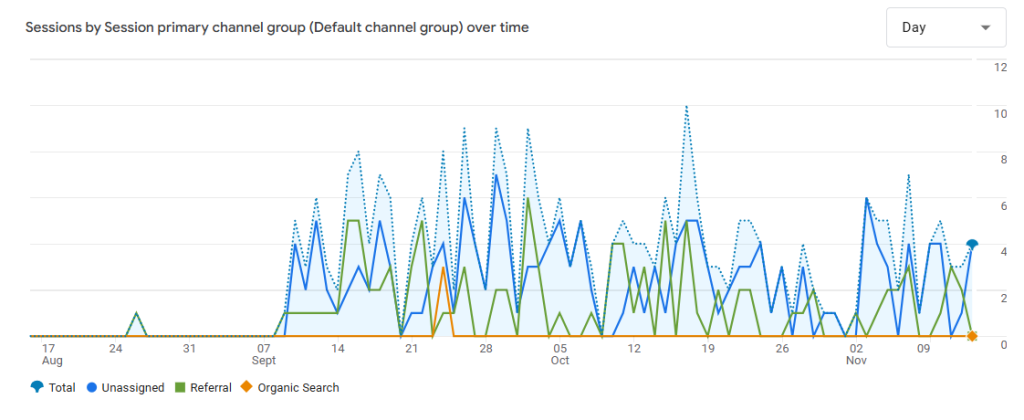
This will give you an idea of how many users are actually visiting your website directly from AI search, however, many customers might see your brand mentioned in AI and then directly search for you in Google.
So, you should also track your direct (branded) traffic volume in Google Search Console to see how it trends over time. As you start to become more prominent in AI search, your branded search volume should also increase.
Prompt-Based Tracking
We also recommend that clients track their relevant prompts in AI as well.
This can be done using various AEO prompt-tracking tools, and the aim here is to continuously track how visible your brand is for its main terms across different LLMs.
This is difficult for a variety of reasons:
- There are infinite variations of ‘search terms’ or prompts a user might enter into an AI chat, unlike a regular Google search, where some search terms are used much more than others.
- Results vary a lot, so you need to track regularly in order to see how your visibility is changing.
In order to have success here, we recommend regular tracking over a certain period of time to see how your AI visibility is changing.
Demo Forms Are Still The Gold Standard
The best way to know if a prospect came from AI search is still to ask them directly, ideally via a form on your demo page.
If possible, you should also try to uncover whether AI search played a role in the sales journey. For example, a prospect might have researched on Claude about the best tools for their problem, and noticed your brand cited as one of the best options.
From there, it’s possible that they directly searched your brand name and landed on your demo page, or maybe they watched a couple of YouTube reviews before or did some prospecting on Reddit.
This requires more nuance and is often something your sales rep can uncover during a discovery or sales call.
Bringing The Signals Together
For complicated sales cycles or longer-term decisions, AI presence is often just one piece of the puzzle.
But that doesn’t mean you should ignore it.
Our recommendation for tracking AI visibility includes a few different angles:
- Track direct referrals – Use the filters laid out in this article to see how many direct referrals you are getting from AI search.
- Track your direct, branded search traffic and impressions – Monitor your search console to see how many impressions and clicks your branded terms are getting on a monthly basis. This obviously blends in with other signals, but you should expect this to increase over time with improving AI visibility, as users search your brand after seeing it recommended to them in AI search.
- Use an AI prompt tracking tool to monitor visibility – Keeping an eye on overall AI visibility, especially for your top terms and conversational prompts, is incredibly important.
- Monitor your form submissions – If demos mention AI search, try to explore this in more detail to see how AI search influenced their buying decision. If they were referred directly from AI search, you are likely doing something right on this front.
Once you have these in place, you have solid metrics you can actually report on, and you’ll have a much better idea of the buying cycle as well.
Reporting AI-Driven Pipeline To Leadership
By this point, you should have a lot more data than usual to report on.
This includes actual AI referral traffic, changes in branded search volume, AI visibility as monitored by a third-party tool, as well as demo forms or information gained during sales calls.
You can combine this data to get a much better idea of how much pipeline is generated either directly or indirectly by AI search.
How Spyndle Can Help
At Spyndle, we offer a range of services to help your SaaS increase its AI visibility, making reporting to leadership much more straightforward.
Right now, guest articles and Reddit engagement are two of the fastest paths to getting your SaaS brand featured in AI, so feel free to reach out if you want to learn more about how this works.