

Like anything new in SEO and now GEO, there’s a lot of skepticism around the best techniques and tactics to get cited in AI.
Are there actually methods you can use to target LLM citations specifically, or is it all just doing ‘regular’ SEO properly?
At Spyndle, we work specifically with high ACV B2B SaaS brands to help them get cited in AI and increase their AI visibility.
As part of this, we’ve experimented with lots of different so-called ‘tactics’, and it turns out that getting B2B SaaS brand cited in ChatGPT is actually a lot more straightforward than you might imagine, as long as you follow a few tips:
- Be realistic about what terms you are targeting
- Use a strategy that consistently gets results (more on this shortly)
Luckily, we’ve done the hard work already, and in this guide, I will explain exactly how to get your SaaS cited in ChatGPT (and other AIs) within two weeks.
Why The Skepticism Exists
I think it’s completely normal for people to be skeptical about GEO ‘tactics’ specifically, as a lot of the results are closely tied to organic SEO performance. If you rank well in Google, the chances are you will be cited quite often in AI (Bing is important, too).
However, there are a few key differences between traditional SEO and GEO that create gaps where you can optimize for AI visibility specifically, if you know what you’re doing.
The main thing here is recency bias and the sources that ChatGPT uses for certain search terms and prompts.
LLMs Are Obsessed With Fresh Content
ChatGPT, Perplexity, and other AI engines tend to heavily favor recent content.
ChatGPT leads the way in this department, with recent data showing that it prefers to cite URLs that are 393 days newer than organic Google results.
At Spyndle, we see new articles cited within days very often for clients in various niches.
They’re Also Obsessed With Listicles
Controversial topic, but something that needs to be mentioned.
In the SaaS space (and most other niches), listicles dominate AI sources and are heavily cited. Check out this article if you want more info.
This is controversial because many SaaS brands are publishing self-promotional listicles that position themselves as the number 1 option for a given search query. I will share an actual example of this shortly.
Recent chatter suggests Google may be targeting this practice, though this has not been confirmed, and I still see many of these rank well in both Google and AI.
How To Actually Get Cited in 2 Weeks
So, how does this translate into getting cited within two weeks?
The process is actually pretty straightforward, and we’ve detailed it extensively in our internal workflow article.
Here’s the short version:
1. We Work With Credible, Niche-Relevant Websites
The main secret is to work with credible websites that are highly cited in AI and niche-relevant.
If we can form a partnership with a website that is already cited for similar terms that a client wants to be cited for, this is ideal.
- Already highly cited in AI engines for relevant terms
- Niche-relevant to the B2B SaaS we’re promoting
- High quality with consistent traffic and authority
This is crucial because ChatGPT doesn’t cite random websites. It pulls from trusted sources that already have a track record of being cited for similar queries.
2. We Publish Or Update Content Targeting Specific Queries
Once we know which websites to work with, we either:
- Publish a new article, targeting a specific query
- Get our client featured in an existing listicle (link insertion/niche edit)
The key here is targeting queries that AI is likely to cite.
For B2B SaaS, this usually means ‘best of’ listicles, comparison articles, or use-case pages.
We’re also continuously improving our process to take actual VoC data and get visibility for prompts relating to this as well – you can learn more about that here.
3. Fresh Content Gets Picked Up Fast
Here’s where the two-week timeline comes from.
When we publish a new article or update an existing one on a high-authority website, ChatGPT typically picks it up within 1-2 weeks. Sometimes it’s even faster – we’ve seen citations appear in as little as 3-4 days.
Why?
Because the content is fresh, published on a trusted source, and targeting queries that ChatGPT is actively looking to answer with the most up-to-date information.
A Real Example Of What This Looks Like
I wanted to include an actual example of how this works, and what better way than a self-promotional listicle, given how hot these are at the moment. Note this works just the same for listicles (or other articles) posted on third-party sites as well.
This article is from Mixmax – https://www.mixmax.com/blog/best-sales-engagement-platforms – and was published less than two weeks ago at the time of writing this article – ChatGPT noticed it 8 days ago, according to the latest result.
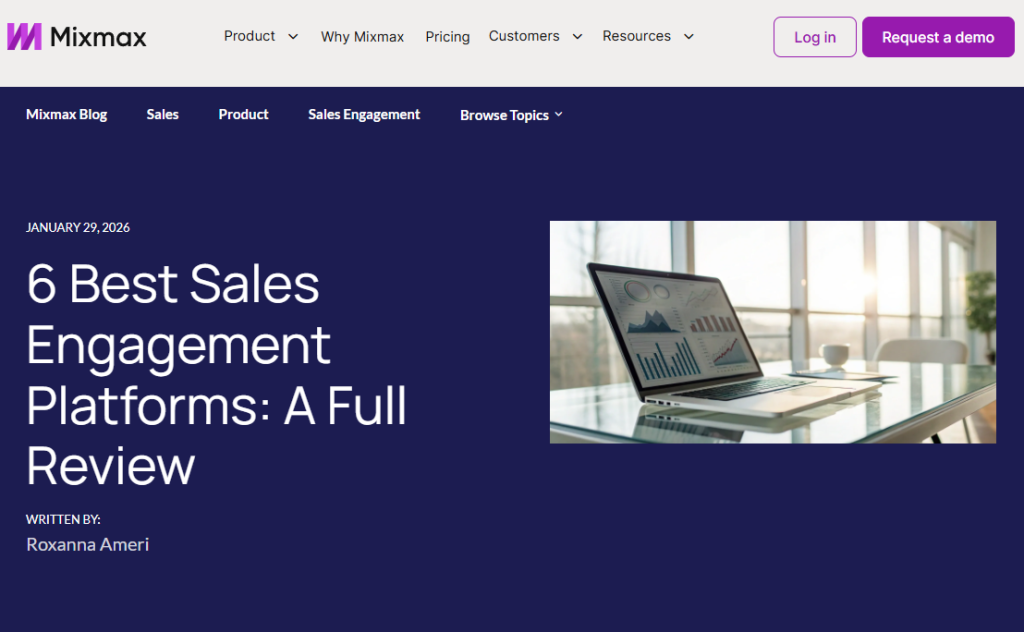
This article is a listicle of the ‘6 Best Sales Engagement Platforms’ with Mixmax as the top choice, naturally.
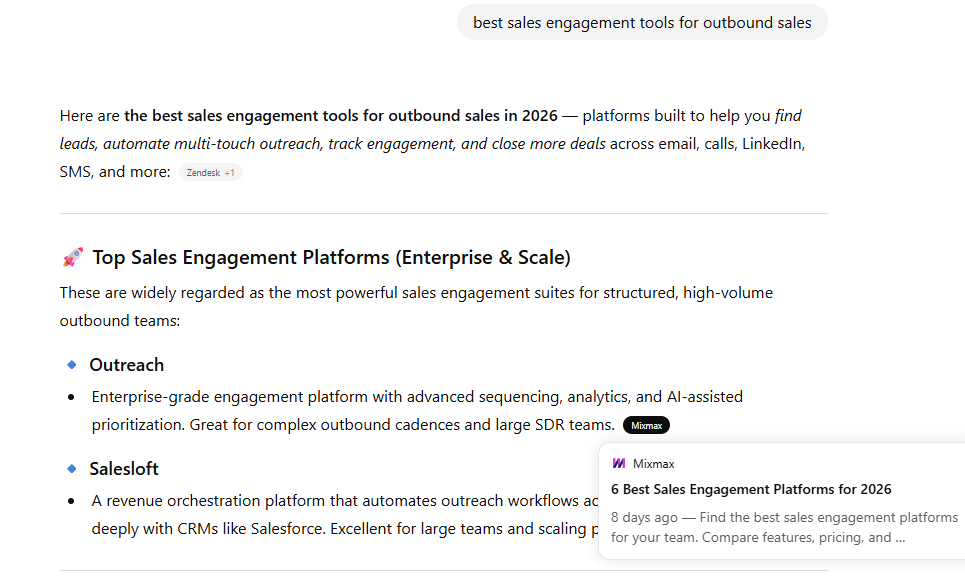
Despite Minmax’s efforts, this article is actually cited in ChatGPT for the term ‘best sales engagement tools for outbound sales’ and references Outreach as the best pick.
In this case, ChatGPT is using the article and referencing another SaaS brand instead of Outreach – something that can happen quite frequently.
I wouldn’t be surprised to see this result change over the next few weeks, but it’s an interesting example of how quickly articles can be cited, and also how oftentimes articles can cite other brands in listicles instead of your own.
What This Means For B2B SaaS Brands
If you’re a B2B SaaS brand and you’re not actively working on AI visibility, you’re already behind.
Your competitors are publishing listicles, getting featured in brand reviews, and claiming AI citations for the queries that matter most to your business. And they’re doing it fast.
If you want even more detail, check out the full case study on Outreach.io. This really dives into what the listicles actually look like, how they get cited, and gives an outlook on the state of the industry right now.
How Things Will Change
It’s quite likely that Google will clamp down on self-promotional listicles, especially when these are overdone. Recent data is already starting to indicate this, but with Google you just never know…
It’s also likely that listicles will become more and more widespread in B2B SaaS in general – we’ve already seen this trend develop massively over the last 12 months.
The real difference maker will be features on the best-in-class listicles, and controlling your brands narative in AI by targeting specific customer prompts relating to problems they have.
Wrapping It Up
Right now, getting cited in ChatGPT in two weeks is very realistic for most B2B SaaS brands.
Whether this remains the case in 2026 and beyond will depend on many factors that are simply outside of our control.
Regardless of what happens, we’re staying on top of the latest tactics to ensure our clients continue to see incredible AI visibility and booked demos.
